The bundle keeps the build brief and style notes together.
Inspired by Curve
Curve Kennels
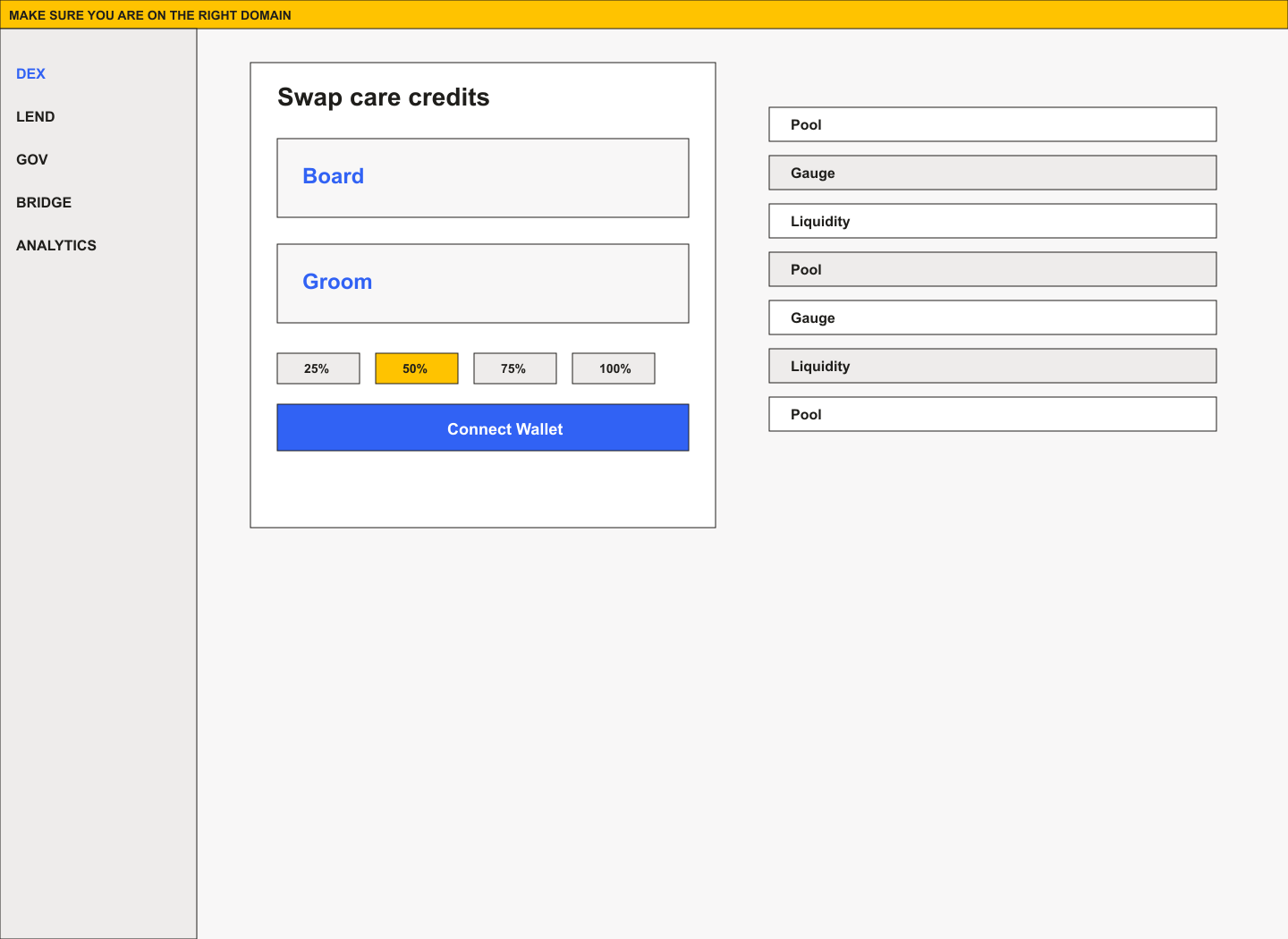
A compact DEX utility kit translated into Curve Kennels, defined by blue/yellow accents, hard-edged dense controls, security warning treatment, swap chips, tabs, and utilitarian navigation.
lightdensebrutalisttechnicalweb3-dashboardexchange
Implementation bundle
Copy one clean packet, or just the pieces you need.
Copy the full bundle when you want an agent to build in this style. Use the individual files when you only need tokens, CSS, Tailwind, or component prompts.
Use CSS variables, Tailwind values, and JSON tokens when you need exact values.
Component prompts describe reusable patterns. Keep weak areas marked limited or unavailable.
# Curve Kennels Implementation Bundle

Use this as the build brief for an AI coding agent. The base remix prompt tells the agent what to make; the style kit adds evidence, component behavior, and known limits.

## Base Remix Prompt

Build an interface using the Curve-inspired Curve Kennels style kit.

A compact DEX utility kit translated into Curve Kennels, defined by blue/yellow accents, hard-edged dense controls, security warning treatment, swap chips, tabs, and utilitarian navigation.

Primary silhouette:
Use a compact utilitarian pet-swap interface: hard-edged off-white panels, blue primary actions, yellow warning/attention strips, tabbed DEX navigation, percentage chips, and dense footer links. Avoid soft glass dashboards or editorial heroes.

Composition:
Build a narrow exchange console beside dense navigation and footer/sidebar links. Use tight gutters, square panels, small type, and circular icon buttons only.

Above the fold:
Start with an explicit compact safety/status strip and immediate swap/pool console; do not make a large lifestyle hero.

Core components:
- Functional panels only: Use panels only for pool lists, swap ticket, warning strip, and footer blocks. Keep corners square.
- Swap ticket inputs: Use a swap-like booking ticket for pet service credits with two amount fields, asset/service selectors, percentage chips, slippage/settings, and connect-wallet action.
- Pool/list rows: Use dense pool or service-liquidity rows with compact columns and blue/yellow status.
- Minimal analytic cue: Use a tiny inline depth/liquidity strip only when needed; keep table/form dominant.
- Warning and connection states: Use yellow warning badges, blue active chain chips, and ink outlined connected/disconnected states.

Image direction: Use minimal geometric pet-exchange symbols and small icon marks; no photorealism, no logos, no readable text, no decorative illustration sprawl.

Do not use source logos, trademarks, proprietary assets, readable source text, or copied screenshots. Stay evidence-backed; if evidence is limited, keep the treatment directional and conservative.


## Agent Kit

# Curve Pet Shop Agent Kit

A compact DEX utility kit translated into Curve Kennels, defined by blue/yellow accents, hard-edged dense controls, security warning treatment, swap chips, tabs, and utilitarian navigation.

## Evidence-Backed Silhouette

### Compact DEX utility surface

Evidence: Evidence shows dense navigation, DEX tabs, swap buttons, slippage/settings controls, input chips, security warning text, Mona Sans, blue/yellow accents, off-white backgrounds, and almost no radius beyond 50% icons.

Prompt guidance: Use a compact utilitarian pet-swap interface: hard-edged off-white panels, blue primary actions, yellow warning/attention strips, tabbed DEX navigation, percentage chips, and dense footer links. Avoid soft glass dashboards or editorial heroes.

### Hard-edged exchange console

Evidence: Evidence records desktop main nav, media-led main app, footer, 2/4/8px spacing, -4px overlap, and only 50% radius.

Prompt guidance: Build a narrow exchange console beside dense navigation and footer/sidebar links. Use tight gutters, square panels, small type, and circular icon buttons only.

### Warning/app-first entry

Evidence: Hero extraction captured security-domain warning and app link content rather than marketing copy.

Prompt guidance: Start with an explicit compact safety/status strip and immediate swap/pool console; do not make a large lifestyle hero.

### Swap chips and icon controls

Evidence: Evidence includes wallet/connect, chain, swap, slippage settings, menu toggle, and 25/50/75/100% chip buttons.

Prompt guidance: Use blunt rectangular action buttons, small circular icon buttons, and percentage chips. Keep hover states high-contrast blue/yellow/ink.

### Functional panels only

Evidence: Card evidence is partial; app panels and trade ticket are stronger.

Prompt guidance: Use panels only for pool lists, swap ticket, warning strip, and footer blocks. Keep corners square.

### Swap ticket inputs

Evidence: Evidence includes Input (2), Select (2), swap token button, slippage settings, and percentage chips.

Prompt guidance: Use a swap-like booking ticket for pet service credits with two amount fields, asset/service selectors, percentage chips, slippage/settings, and connect-wallet action.

### Pool/list rows

Evidence: Asset table pattern is detected and DEX tabs imply pools/dashboard rows.

Prompt guidance: Use dense pool or service-liquidity rows with compact columns and blue/yellow status.

### Minimal analytic cue

Evidence: Chart/metric evidence exists but detailed chart style is weak.

Prompt guidance: Use a tiny inline depth/liquidity strip only when needed; keep table/form dominant.

### Warning and connection states

Evidence: Evidence includes security warning, wallet/connect, chain controls, and status-like DeFi cues.

Prompt guidance: Use yellow warning badges, blue active chain chips, and ink outlined connected/disconnected states.

### Utility iconography only

Evidence: Palette evidence is off-white, blue, yellow, ink, and muted grays.

Prompt guidance: Use minimal geometric pet-exchange symbols and small icon marks; no photorealism, no logos, no readable text, no decorative illustration sprawl.

## Image Direction

Use minimal geometric pet-exchange symbols and small icon marks; no photorealism, no logos, no readable text, no decorative illustration sprawl.

Do not use source logos, trademarks, proprietary assets, or raw source screenshots. Concrete visual decisions must remain tied to the cleaned kit evidence and copied artifacts.